What is cold chain transport? Cold chain transport means keeping temperature-sensitive products such as pharmaceuticals, vaccines, biologics, food and cosmetics within a defined temperature range at every stage from production to delivery. For medicines, this chain is governed by Good Distribution Practice (GDP): the temperature must not only be maintained but also recorded and proven at every stage. In this guide, we explain what GDP expects from transport, the main temperature ranges, the options for air, road and sea, packaging types, what to do when a temperature excursion occurs, and the questions to ask when choosing a logistics partner.
Why are cold chain failures so costly?
For a temperature-sensitive product, going outside the temperature limits can mean the product loses its efficacy or becomes unusable. For medicines, this is not just a loss of goods: the product is quarantined, the excursion is investigated and, if necessary, the product is destroyed; the supply delay can reach all the way to the patient. Turkey's pharmaceutical trade is also growing. According to the Pharmaceutical Manufacturers Association of Turkey (İEİS), Turkey's pharmaceutical exports rose by 9.3% in 2025 to 2.51 billion dollars, and pharmaceutical imports rose by 17.4% to 7.3 billion dollars (İEİS). A significant part of this volume consists of products that must be transported under temperature control.
What is GDP, and what does it expect from transport?
GDP is the set of rules that ensures the quality of medicinal products for human use is maintained throughout storage and distribution. In the European Union, the core text is the EU GDP Guidelines of 5 November 2013 (2013/C 343/01). In Turkey, the Good Distribution Practice (GDP) Guidelines for Medicinal Products for Human Use, published by the Turkish Medicines and Medical Devices Agency (TİTCK) and revised in 2022, apply (TİTCK).
For transport, GDP's main expectations are:
- Storage conditions also apply in transit: The temperature limits set by the manufacturer or stated on the outer packaging must be respected at every stage of transport. The European Commission states clearly that these limits may not be deviated from, even if the manufacturer accepts a short-term excursion (European Commission GDP Q&A).
- Risk-based planning: Risks are identified and controlled for each lane (origin and destination, season and transfers).
- Records and traceability: Temperature is recorded throughout the journey. The recipient can request the temperature records for the transport.
- Qualified equipment: Vehicles, containers and packaging must be qualified as fit for purpose, and measuring devices must be calibrated regularly.
- Responsibilities shared in writing: The responsibilities of the shipping company and the logistics service provider must be clearly defined in a quality agreement.
Which product is transported at which temperature?
The correct temperature range is determined by the product label and the manufacturer's instructions. Commonly used ranges:
| Range | Name | Example products |
|---|---|---|
| +2 / +8 °C | Refrigerated | Vaccines, insulin, many biologics, some cosmetics and food products |
| +15 / +25 °C | Controlled room temperature | Most medicines in tablet and capsule form |
| -18 °C and below | Frozen | Frozen food, some biological samples and medicines |
| -60 °C and below | Deep-frozen, cryogenic | Some vaccines, cell and gene therapies; transported with dry ice or liquid nitrogen |
Medicines labelled "store at room temperature" are not outside the cold chain either. In summer, a truck body or a pallet waiting on the apron can easily exceed 40 °C. That is why +15/+25 °C products must also be transported under temperature control in line with GDP.
Air, road or sea: which transport mode?
| Transport mode | When is it preferred? | What to watch out for |
|---|---|---|
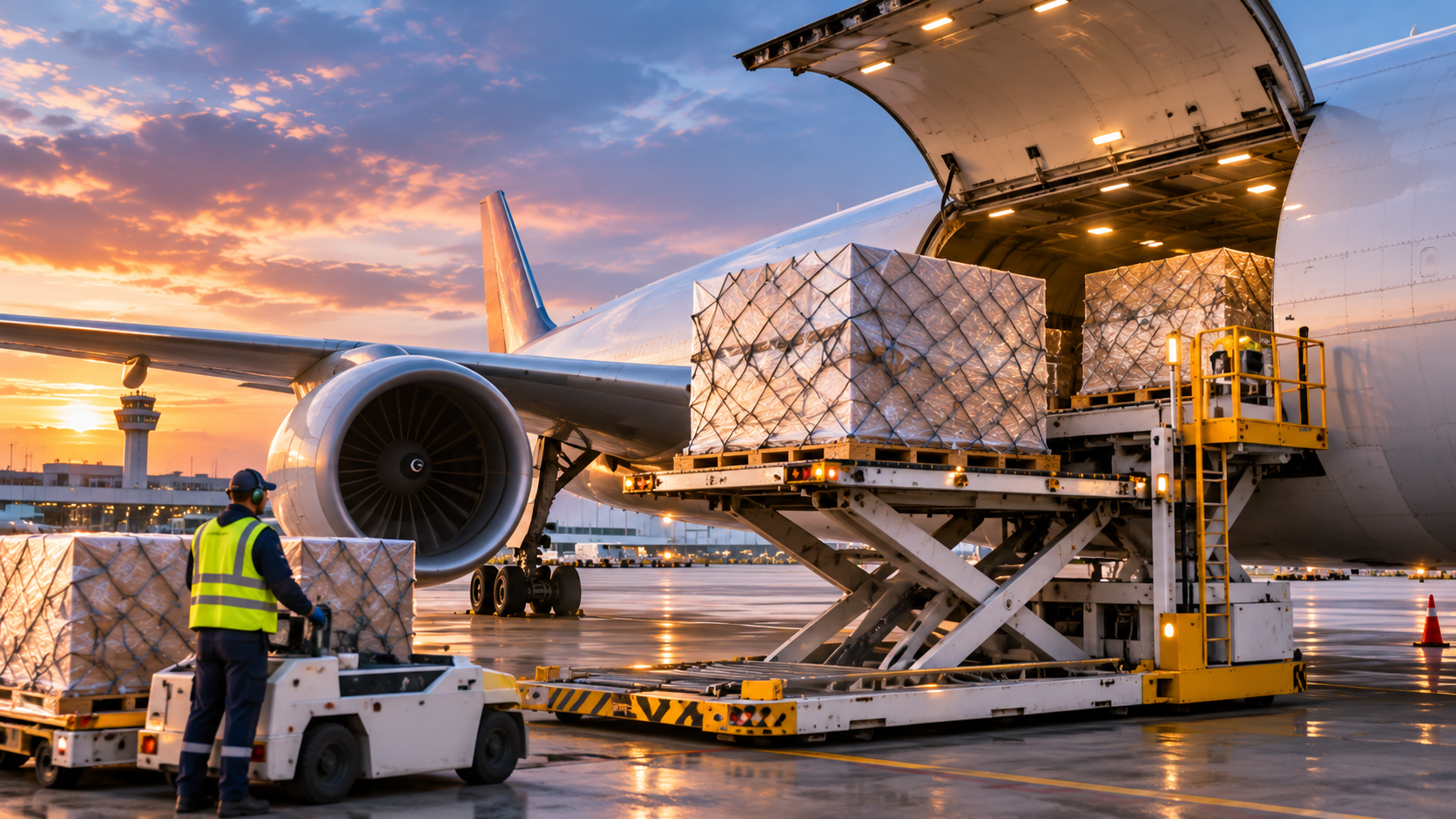
| Air freight | Long distances, short shelf life, high-value products and urgent shipments | Most temperature excursions happen not in flight but while waiting on the apron and at the terminal |
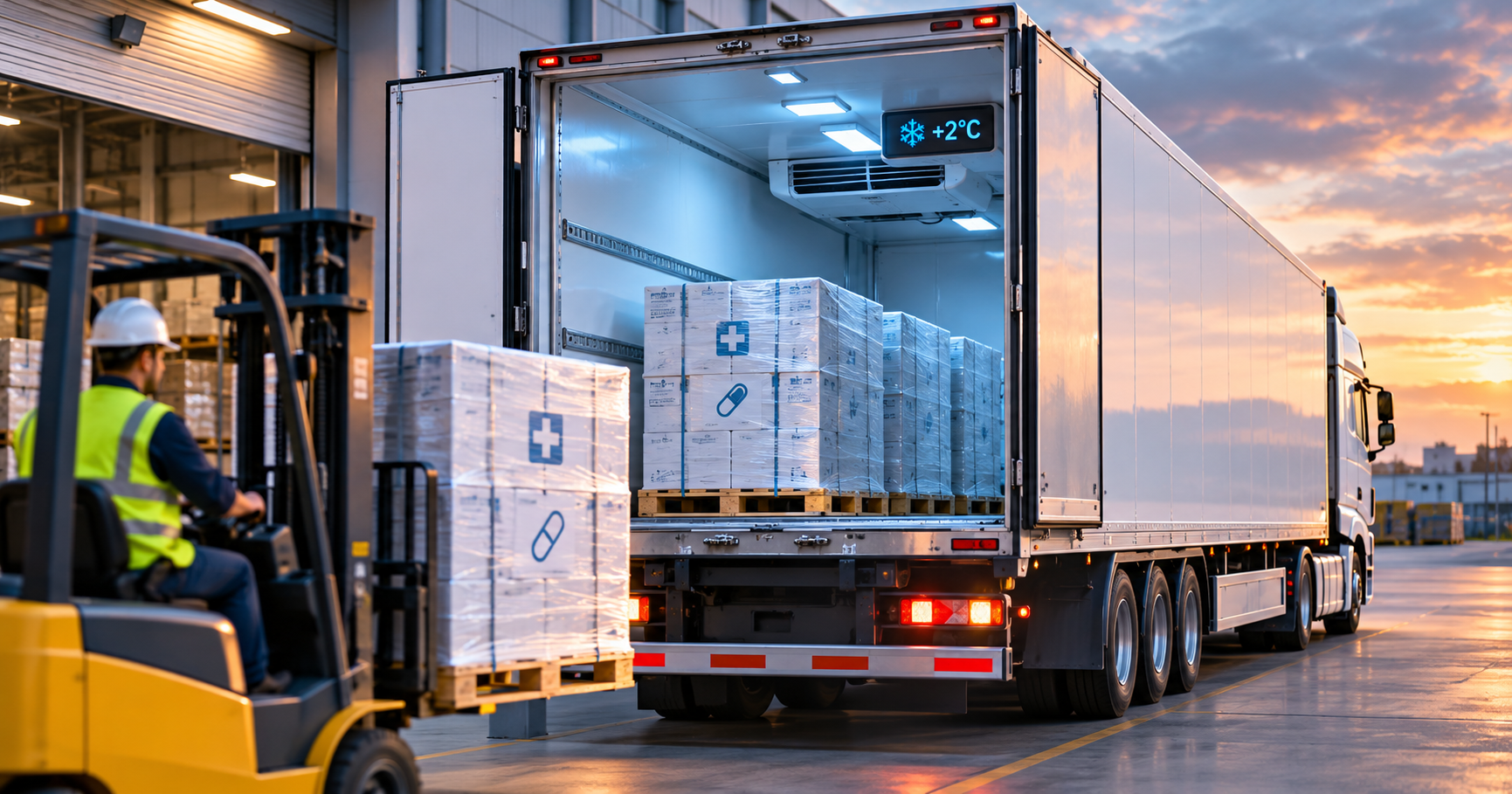
| Road (refrigerated truck) | Door-to-door shipments to and from Europe, the Balkans and the CIS | A qualified refrigeration unit, continuous temperature recording, and a fuel and back-up plan for border waits |
| Sea (reefer container) | Planned, high-volume products with a long shelf life | Long transit time; power connection at ports and container monitoring must be uninterrupted |
Air transport of pharmaceuticals is governed by IATA's Temperature Control Regulations (TCR). For healthcare products booked as time and temperature sensitive, the "Time and Temperature Sensitive" label, which shows the external transport temperature range, has been mandatory since July 2012 (IATA). For airlines, ground handlers and forwarders, IATA's CEIV Pharma programme independently verifies that facilities, equipment, processes and staff meet the standards for handling pharmaceuticals (IATA). We explain how air cargo works in general in our air cargo guide.
Passive or active: choosing the right packaging
- Passive packaging: Insulated boxes (EPS, polyurethane or vacuum-insulated panels) with gel packs or phase change materials. It needs no power and is flexible at carton level. Its protection time is limited (mostly 48–120 hours) and it must be designed for the outside temperature; summer and winter require different packing configurations.
- Active packaging: Battery- or mains-powered air cargo containers with their own cooling or heating system. They are preferred on long routes with transfers and for high-value, large-volume shipments. Rental costs are high, and charging and return of the equipment must be planned along the route.
- Temperature-controlled trucks and reefers: Refrigerated trucks on the road and reefer containers at sea condition the product at pallet level. The product must be loaded only after the vehicle has been pre-cooled or pre-conditioned to the correct temperature.
Packaging should be chosen for the weakest link of the route: the longest wait, the hottest or coldest transfer point and possible delays. The packaging's protection time should leave a safety margin above the planned door-to-door time.
What to do if a temperature excursion occurs
Even in the best-planned shipment, the temperature can go outside the limits. What matters is that the excursion is detected and the product is assessed correctly:
- Recording: Every shipment should carry a calibrated temperature data logger; where possible, use devices that report location and temperature in real time.
- Check on delivery: The recipient reads the logger on delivery and keeps the records with the shipment.
- Quarantine: If there is an excursion, the product is held in a separate area and not released for sale or use.
- Assessment: The duration and size of the excursion are compared with the manufacturer's stability data. The decision is made by the product owner and the manufacturer's quality unit; the logistics company cannot make it.
- Root cause and corrective action: Where and why the excursion occurred is investigated, and the route or packaging plan is updated.
Which documents and records are needed?
- Quality agreement: Defines the GDP responsibilities between the shipper and the logistics service provider.
- Transport instructions: The temperature range, packaging type, loading and transfer conditions, and who to call in case of an excursion.
- Transport documents: The temperature instructions should be stated clearly on the air waybill (AWB) and the road consignment note (CMR).
- Temperature records: Data logger outputs and vehicle or container temperature reports.
- Labels: In air cargo, the "Time and Temperature Sensitive" label and, if dry ice is used, the dangerous goods label and declaration.
- Product-specific permits: For medicinal products imported into Turkey, the permits and controls of TİTCK and notifications to the Pharmaceutical Track and Trace System (İTS). These need to be prepared in advance so they do not extend the time the product waits in cold storage at customs.
Customs clearance on arrival is one of the most sensitive links in the cold chain. A shipment with complete documents spends only a short time in cold storage, while a missing document increases both cost and risk. We plan this process in advance with our customs clearance team.
8 questions to ask when choosing a cold chain logistics partner
- Which certifications and accreditations do you hold (GDP, IATA, CEIV Pharma, ISO)? Can you share the certificates and their scope?
- Will you sign a quality agreement with me?
- Are your vehicles and equipment qualified; do you have temperature mapping and calibration records?
- How do you monitor temperature throughout the journey; do you receive real-time alarms?
- What is your procedure if an excursion occurs, and how quickly will you inform me?
- Have you carried out a risk assessment for this lane; where are the transfer and waiting points?
- What is your back-up plan in case of delays, breakdowns or border waits?
- Is your team trained in pharmaceutical and temperature-controlled transport?
Cold chain transport with Elin Logistics
- GDP-certified cold chain transport by road for pharmaceuticals, food and cosmetics at +2/+8 °C and -18 °C
- Full truckload and groupage shipments by refrigerated truck to and from Europe, the Balkans and the CIS, with real-time GPS tracking
- As an IATA-accredited agent, temperature-controlled shipments by air; an IATA DGR-certified team for packaging containing dangerous goods such as dry ice
- Expedited customs clearance on arrival and delivery to your address
Send us your product's temperature range, packaging type, dimensions and weight, origin and destination addresses and target delivery date through our quote form, and we will get back to you with a transport mode and temperature plan suited to your route.